
News
Follow us for the latest updates in cross-border logistics.

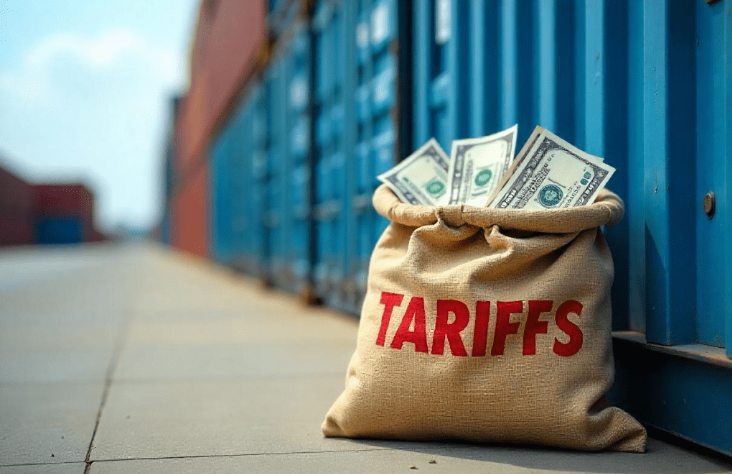
This Friday (January 9th), the US Supreme Court will make a final ruling on the global tariff policy implemented during the Trump administration. This ruling has drawn much attention, especially as it has a profound impact on Sino-US trade relations. Chinese enterprises and related industries are closely following it.
The scope of the Supreme Court's ruling this time focuses on the tariff measures introduced based on the International Emergency Economic Powers Act (IEEPA), mainly involving China the 10% "fentanyl tariff" and the 10% "equivalent tariff".
If the ruling is illegal, the tariffs imposed by the United States on China may be reduced by up to 20%, and enterprises can apply to the U.S. Customs and Border Protection for a refund of hundreds of billions of dollars for the corresponding tariffs they have already paid.
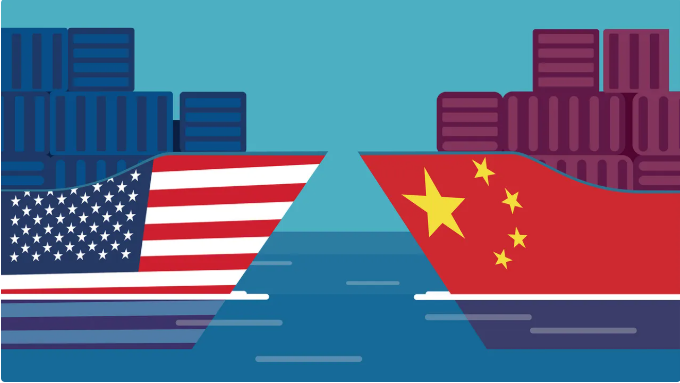
After taking office in his second term, Trump restarted the strategy of "promoting the return of manufacturing through tariffs". In April 2025, he announced a universal 10% tariff and also imposed "reciprocal tariffs" ranging from 10% to 50% on most countries. At the same time, under the pretext of "cracking down on the source countries of fentanyl", an additional 10% "fentanyl tariff" will be imposed on China, Canada, Mexico and other countries in accordance with the International Emergency Economic Powers Act (IEEPA).
However, these tariff policies have been controversial since their introduction. Both the United States Court of International Trade and the Federal Circuit Court of Appeals ruled that tariffs based on the IEEPA "exceed the authority of the president" and violate the scope of authorization granted by Congress. When the Supreme Court held its oral argument in November 2025, the majority of the justices also expressed doubts about the government's claims.
According to market forecast data, the probability of Trump's tariff policy being maintained is only 22% to 30%, while the probability of it being completely overturned is as high as 70% to 78%. Several research institutions also predict that the probability of tariffs being overturned is relatively high.
At present, many US enterprises have initiated legal actions in advance. Conservatively estimated, the total amount of refunds may exceed 100 billion US dollars. This will not only inject short-term cash flow into the manufacturing and retail industries in the United States, but also, for Chinese exporters, some goods that were unsold or had their customs clearance delayed in the US will resume circulation, and the trade flow is expected to recover.
Although the Trump administration insisted that the tariff policy was "legitimate", Trump himself rarely expressed concerns on social media, saying that if the Supreme Court overturned the tariffs, it would deal a "heavy blow to the US manufacturing industry". This reflects that tariffs have become a political symbol ahead of the 2026 elections.
The government advisory team disclosed that if the IEEPA measures fail, Trump may turn to Section 232 (National Security Tariffs) or Section 301 (Unfair Trade Tariffs) for re-imposition. However, these mechanisms have long review cycles, high requirements for evidence, and limited coverage. In the short term, the United States will lose the administrative convenience of rapid taxation, and Chinese and American enterprises will enter a brief strategic buffer period.
Since the implementation of the tariffs, inflationary pressure in the United States has remained high, and the prices of imported goods have pushed up consumer spending. The government has had to announce temporary tariff exemptions for some key industries.
Once tariffs are overturned, the growth rate of the US CPI may drop significantly in the second quarter of 2026, and the momentum of global supply chain "decoupling" will temporarily slow down. China's export structure will also gain room for repair. Cross-border e-commerce and manufacturing orders are expected to flow back, and the RMB exchange rate may experience a short-term rebound. Some Southeast Asian countries may face the pressure of short-term capacity transfer and return to China.

Overall, the possibility of the United States lowering tariffs on China is extremely high, and the final outcome depends on the ruling of the Supreme Court this Friday. Chinese enterprises and related industries need to closely monitor the dynamics of the ruling, make preparations in advance, seize possible opportunities and promote their own development.
Article source: Wai Tusi Talks about Shipping, Freight Forwarding Headlines
200 Million Yuan Worth of Goods Vanish Overnight! Multiple Overseas Warehouses Collapse in Succession
Great News! Starting April 1, Cross-border E-commerce Returns Will No Longer Take Detours
US Treasury Secretary: Imposing a 15% tariff globally, it is expected to take effect this week
Latest! Trump: Imposing a 25% tariff! Take effect immediately!
The volume of goods has declined, and the anticipated peak season demand has not materialized. In November, the volume of imported containers in the United States decreased by 5.4% month-on-month
A freight rate war is about to break out! The peak season of the container shipping market has come to an end, and freight rates on major routes have generally dropped
The "Measures for Announcing Tax Arrears" has been released! It will come into effect on March 1, 2026
Maersk Advises: General Average Declared for Vessel “Kyparissia”


Customer Support:
Email: yybd@yiyanggj.com
3rd Floor, Building 1, Boni Industrial Park, No. 129 Chunhan Road, Beiyuan Subdistrict, Yiwu City, Zhejiang Province, China