
News
Follow us for the latest updates in cross-border logistics.

According to multiple industry media reports, over five overseas warehouses near the Port of Long Beach in Los Angeles, USA, which specialized in low-cost dropshipping, have collapsed in a "chain reaction".
It is revealed that warehouse owners have gone missing, warehouses have been sealed off by landlords, and goods have been impounded or even illegally resold. More than 2,000 Chinese sellers have been innocently implicated, with the total value of affected goods exceeding 200 million yuan. Individual losses have topped 10 million yuan, while small and medium-sized sellers have suffered losses ranging from tens of thousands to hundreds of thousands of yuan across the board.
The collapse of Los Angeles overseas warehouses struck suddenly, leaving no room for recovery.
“We can’t reach the warehouse, and the locks have been changed.”
“All my goods at the Port of Long Beach have been sealed.”
“I have a container worth over 8 million yuan, but the warehouse owner is missing and the landlord won’t let us in.”
“A 3C seller had goods across 8 warehouses resold illegally.”
…
Most small and medium-sized sellers cannot afford the time and energy, and ultimately have to give up reluctantly, ending up with neither money nor goods.

The seemingly sudden collapse is actually an inevitable result of cutthroat low-price competition and illegal operations in the overseas warehouse industry.
During the pandemic, many overseas warehouses expanded recklessly with high leverage, borrowing to rent facilities and signing long-term high-rent leases. In the post-pandemic era, consumer demand cooled and cargo volumes plummeted. While revenues shrank sharply, fixed costs remained high, widening the budget deficit.
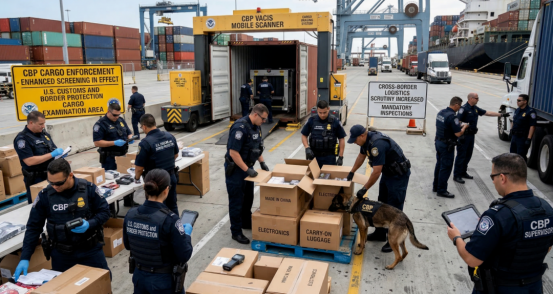
Starting in the second half of 2025, the U.S. tightened regulatory compliance for logistics shipping labels, strictly inspecting customs clearance qualifications and illegal labels. This shut down the gray-area operations that low-cost warehouses relied on for survival.
Many greedy sellers, prioritizing small savings over big risks, also fueled these low-price traps.Amid fierce competition on cross-border e-commerce platforms and shrinking profit margins, sellers sought to cut costs from logistics, blindly chasing low prices without verifying qualifications. Holding a “it won’t happen to me” mentality, they fell straight into premeditated traps.
The Los Angeles overseas warehouse collapse serves as a stark lesson for all cross-border sellers: logistics is the lifeline of cross-border operations. Choosing the wrong overseas warehouse can nullify all earlier operational efforts.
No matter how reliable a partner warehouse seems, never store all goods in one location. Distribute inventory across 2–3 independent legitimate overseas warehouses. If one facility encounters problems, it will not trigger a total stockout or complete business failure.
There are no shortcuts in cross-border commerce. Chasing temporary low prices may ultimately lead to financial ruin.
Great News! Starting April 1, Cross-border E-commerce Returns Will No Longer Take Detours
US Treasury Secretary: Imposing a 15% tariff globally, it is expected to take effect this week
Latest! Trump: Imposing a 25% tariff! Take effect immediately!
"Big twist!" The US tariffs on China may be reduced by 20%! The paid customs duties may be refundable!
The volume of goods has declined, and the anticipated peak season demand has not materialized. In November, the volume of imported containers in the United States decreased by 5.4% month-on-month
A freight rate war is about to break out! The peak season of the container shipping market has come to an end, and freight rates on major routes have generally dropped
The "Measures for Announcing Tax Arrears" has been released! It will come into effect on March 1, 2026
Maersk Advises: General Average Declared for Vessel “Kyparissia”


Customer Support:
Email: yybd@yiyanggj.com
3rd Floor, Building 1, Boni Industrial Park, No. 129 Chunhan Road, Beiyuan Subdistrict, Yiwu City, Zhejiang Province, China